August 17, 2026
IBM's New OpenAI Partnership Signals the End of Single-Vendor AI Bets
Enterprise AI strategy used to follow a simple script: pick a frontier model vendor, build your consulting and integration stack around it, and let switching costs do the rest. That script just got torn up by the company that, more than any other, sells enterprises their AI strategy in the first place.
On August 13, 2026, IBM announced a sweeping partnership with OpenAI to embed GPT-5.6, Codex, and ChatGPT Work across IBM Consulting’s client work — less than a year after IBM struck an equally strategic alliance with Anthropic. The world’s largest enterprise AI consultancy is no longer betting on one model provider. It’s building parallel practices around two of them at once, and that choice says more about where enterprise AI is heading in 2026 than either announcement does on its own.
This post breaks down what IBM and OpenAI actually announced, how it fits alongside IBM’s earlier Anthropic deal, and why “pick one vendor and standardize” is quietly becoming bad advice for any business planning its AI stack for the next three years.
What IBM and OpenAI Actually Announced
The partnership centers on a new OpenAI Practice inside IBM Consulting — a dedicated unit that will train and certify thousands of IBM consultants and engineers on OpenAI’s technology stack, according to IBM’s own announcement. IBM also joins OpenAI’s Elite partner tier, the top rung of OpenAI’s enterprise partner program.
Three things stand out in the scope:
- Deep product integration. GPT-5.6, Codex, and ChatGPT Work get woven into IBM Consulting Advantage, IBM’s AI-powered delivery platform, targeting core operations like finance, procurement, customer service, and HR.
- Regulated-industry focus. The joint go-to-market push is explicitly aimed at financial services, government, telecom, and retail — sectors where IBM has decades of compliance and systems-integration experience that a model vendor alone can’t replicate.
- A dedicated cybersecurity track. IBM Autonomous Security, a multi-agent security service, will work alongside OpenAI’s Daybreak Cyber Partner Program. That’s not a minor add-on — CNBC reported this month that AI-enabled breaches now average $6 million per incident, roughly $1 million above the overall breach average, and account for 1 in 4 malicious breaches tracked between March 2025 and February 2026, up 56% year over year. Enterprise buyers are pricing that risk in, and vendors are visibly responding to it.
TechCrunch’s coverage of the deal frames it plainly: this is IBM hedging across model vendors rather than tying its consulting business to one lab’s roadmap.
IBM’s Second Big Bet in Under a Year
To understand why that hedge matters, it helps to look at what came before it. In October 2025, IBM and Anthropic announced their own strategic partnership, which sent IBM’s stock up more than 4% in premarket trading. That deal infused Claude into IBM’s software portfolio, starting with an AI-first integrated development environment for enterprise software modernization. By the time of the announcement, the IDE was already in private preview with 6,000 internal IBM users and reportedly delivering productivity gains of up to 45%. The partnership also produced IBM’s AgentOps framework, a real-time monitoring and policy-control layer for AI agents in production — the kind of governance tooling we’ve argued becomes non-negotiable once a company moves past a handful of pilot agents, as we covered in our look at the agent fleet era.
Ten months later, IBM is running essentially the same playbook with a different model provider, down to the emphasis on governance and security tooling built alongside the model integration. That’s not a company that picked wrong the first time and is course-correcting. It’s a company that has concluded a single-vendor AI strategy is itself the risk.
Why Multi-Vendor Is Becoming the Rational Default
The Lock-In Lesson Enterprises Already Paid For
IBM isn’t alone in reaching this conclusion, and enterprises have already been burned by the alternative once this year. When AWS retired Bedrock Agents Classic in favor of AgentCore, companies that had built deep, framework-specific integrations around the original service had to rebuild significant parts of their agent infrastructure — a lock-in cost we detailed in our breakdown of the AgentCore shift. The lesson generalizes well beyond AWS: standardizing tightly on any single vendor’s proprietary stack — model, orchestration layer, or agent runtime — means inheriting that vendor’s roadmap changes, pricing shifts, and architectural pivots whether or not they suit your business.
Model Quality Is Converging, and Releases Won’t Slow Down
The pace of frontier-model releases makes single-vendor commitments riskier in a second way: the performance gap between providers keeps narrowing, and the release cadence keeps accelerating. Google shipped Gemini 3.7 Flash on August 13 — the very same day as the IBM-OpenAI announcement — just three weeks after its predecessor, Gemini 3.6 Flash. Google claims the new model outperforms comparable Anthropic and OpenAI models across nine benchmarks and priced it at half of the prior model’s launch cost through the end of the year. We’ve tracked this dynamic before in our look at the AI arms race between GPT, Gemini, and Claude: when the “best” model changes every few weeks and the quality gap between top providers keeps shrinking, betting your entire operation on one lab’s continued lead is a weaker position than it looks.
The Money Backing the Models Is Also a Signal
There’s a financial dimension to this too. Anthropic is reportedly projecting $190 billion to $200 billion in 2028 revenue as it prepares for one of the largest IPOs on record — a striking jump from its roughly $9 billion revenue run-rate at the end of 2025, which had already grown to more than $47 billion by May 2026. OpenAI, for its part, continues expanding its own enterprise and consumer monetization, including a rollout of ads to free ChatGPT tiers in Europe this month, while keeping Plus, Pro, Business, Enterprise, and Edu tiers ad-free. Both companies are scaling revenue and product lines aggressively and independently — which is exactly the kind of environment where hitching your business exclusively to one of them, rather than maintaining optionality across two or three, becomes a harder case to defend to a board.
The Governance Cost Nobody Should Skip
None of this means multi-vendor AI is free. Running GPT-5.6 in one part of the business and Claude or Gemini in another multiplies the governance surface area a company has to manage — separate security postures, separate audit trails, separate integration patterns for each provider’s tools and agents. That’s the same problem we flagged in our piece on enterprise AI governance in the agent fleet era: once an organization is running more than a couple of agents or models in production, ad hoc oversight stops scaling, vendor-diverse or not. The practical fix is standardizing the governance layer even while diversifying the model layer — consistent identity, access control, and monitoring policies applied uniformly regardless of which vendor’s model sits behind a given workflow, using vendor-agnostic protocols where possible rather than each provider’s proprietary tooling.
Practical Takeaways for Business Leaders
If you’re setting AI strategy this quarter, IBM’s move is a useful forcing function to revisit a few assumptions:
- Treat model selection as a portfolio decision, not a platform decision. Evaluate workloads individually — coding assistance, customer support, document processing — rather than assuming one vendor should win every use case.
- Separate your governance stack from your model stack. Build access control, monitoring, and audit logging in a way that doesn’t assume any single vendor’s APIs or agent runtime, so switching or adding a provider doesn’t mean rebuilding oversight from scratch.
- Weight security tooling in vendor evaluations, not just model benchmarks. The IBM-OpenAI deal’s emphasis on a dedicated cybersecurity track reflects where enterprise buyers are actually spending scrutiny this year.
- Revisit “single source of truth” vendor contracts. If your organization signed an exclusive or heavily discounted single-vendor agreement in 2024 or early 2025, it’s worth checking whether the switching costs it locked in still make sense given how fast relative model quality is moving.
- Don’t let vendor diversity become an excuse to skip production discipline. Multi-vendor strategy solves a different problem than the one that keeps 61% of companies from seeing AI ROI — that gap is mostly about weak deployment process, not vendor choice, and diversifying providers won’t fix a pilot that was never built to scale.
The bigger takeaway is less about IBM specifically and more about what its behavior reveals: the companies with the deepest visibility into enterprise AI deployment — the consultancies actually in the room for hundreds of AI rollouts a year — are the ones hedging hardest across vendors right now. That’s worth paying attention to even if you never sign a contract with IBM Consulting.
Frequently Asked Questions
Does the IBM-OpenAI partnership mean IBM is dropping Anthropic?
No. IBM has given no indication it’s winding down its Anthropic partnership, which is centered on software development tooling like its AI-first IDE and AgentOps governance framework. The OpenAI deal runs in parallel, with its own focus areas in consulting, core operations, and cybersecurity — the two partnerships target overlapping but distinct parts of IBM’s business.
Is a multi-vendor AI strategy realistic for a mid-sized business, or only for companies with IBM’s resources?
It’s realistic at smaller scale, but the approach has to be simplified. A mid-sized business doesn’t need parallel consulting practices for each vendor — it needs a governance and integration layer (identity, logging, access control) that isn’t hard-coded to one provider’s APIs, so adding or switching a model vendor for a specific workload doesn’t require rebuilding the surrounding infrastructure.
Why is cybersecurity such a prominent part of this announcement specifically?
AI-enabled attacks are rising sharply — breach-notice volumes tied to AI-enabled incidents were already outpacing all of 2025 by mid-2026, with average costs roughly $1 million higher than non-AI breaches. Enterprise buyers are increasingly evaluating AI vendors on security tooling and incident response as much as on model capability, which is why both IBM and OpenAI built a dedicated security track into the deal rather than treating it as an afterthought.
Does model performance really change fast enough to justify not committing to one vendor?
Recent releases suggest yes. Google shipped Gemini 3.7 Flash just three weeks after its predecessor, and providers are routinely leapfrogging each other on specific benchmarks within a single quarter. That pace doesn’t mean any one model is unreliable — it means the relative advantage of “the best” model at signing time can erode within months, which is the core argument for keeping switching costs low.
What should I actually do differently after reading this?
Start by auditing whether your current AI vendor contracts and integration patterns would survive adding a second model provider without a rebuild. If the honest answer is “we’d have to redo our governance and tooling from scratch,” that’s the gap to close first — independent of whether you ever actually sign with a second vendor.
Sources
- IBM Newsroom: IBM Partners with OpenAI to Accelerate Secure AI Deployment for Enterprises - Official announcement of the IBM-OpenAI partnership, August 13, 2026
- TechCrunch: IBM partners with OpenAI to bolster enterprise AI push - Independent reporting and analysis of the deal
- IBM Newsroom: IBM and Anthropic Partner to Advance Enterprise Software Development - Details of IBM’s October 2025 Anthropic partnership
- Investing.com/Reuters: Anthropic IPO valuation hinges on $190-200 billion 2028 revenue forecast - Anthropic revenue projections and IPO context
- SiliconANGLE: Google launches Gemini 3.7 Flash for coding and AI agent projects - Gemini 3.7 Flash launch details, pricing, and benchmarks
- CNBC: Data breaches surge in 2026 amid AI cyberattacks - AI-enabled breach statistics and cost data
- OpenAI: Testing ads in ChatGPT - OpenAI’s ad rollout and tier structure
Have a project like this in mind?
Tell us what you're building — we'll help you scope it and ship it.
Talk to usKeep reading
October 9, 2026
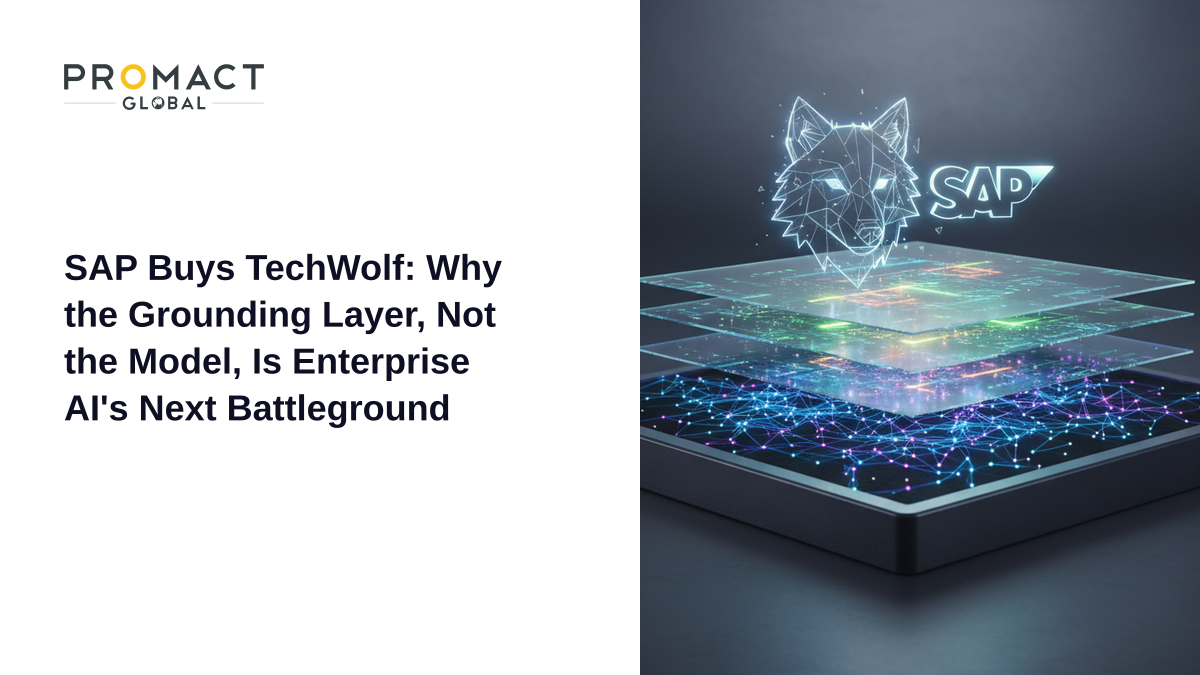
SAP Buys TechWolf: Why the Grounding Layer, Not the Model, Is Enterprise AI's Next Battleground
October 8, 2026
Oracle Fusion Claw: What a Governed Agent Runtime Inside Your ERP Means for Finance and Operations Teams
October 7, 2026