Cloud modernization for manufacturing & FMCG businesses

Release faster. Scale smarter. Spend less.

  • Up to 70% faster deployments
  • Lower cloud costs
  • Higher reliability
  • Less downtime

Modernize your infrastructure with Promact and build a technology environment that keeps up with your business.

Book a free assessment

The release-speed gap

Legacy
Elite
Monthly to every 6 months Release On demand, many times a day 1 to 6 months Lead time Under a day A week or more Recovery Under an hour
  • 21+ years in business
  • 120+ full-time engineers
  • AWS Services Partner
  • Microsoft Solutions Partner
  • Multicloud: AWS, Azure, GCP

Most businesses aren't short on ambition. They're held back by infrastructure that wasn't built to keep pace with it.

Here is where that gap usually shows up first, and what it is costing the business in each case.

01

Releases move slower than the business needs

Every release is still a manual, multi-step process, so new capability reaches customers later than it should.

02

Engineering time goes into keeping old systems running

The team that should be shipping features spends its week firefighting instead of building what is next.

03

Cloud spend keeps rising without a clear line to value

Growth in spend should track growth in the business, not run ahead of it.

04

A launch waits on infrastructure

A new plant, product, or market launch waits on infrastructure, instead of infrastructure being ready for it.

05

One serious outage could interrupt growth for months

Not just a day. The business needs to know its infrastructure can absorb pressure, not just survive it.

None of this is permanent. It is exactly where the right infrastructure changes the outcome.

The four outcomes modernization is really about.

Four things change when infrastructure catches up with the business. Here is the gap most companies start from, and the outcome on the other side of it.

Cost control 29%

cloud spend wasted industry-wide

Predictable spend you can plan around

Nearly a third of cloud spend goes to waste. Better visibility and FinOps governance put that budget directly back into development, scaling costs with actual business growth.

What changes

Cloud spend scales with business value, not infrastructure waste.
Engineering capacity 75% → 25%

time on tech debt after restructuring

Building what's next instead of maintaining the past

Technical debt acts as a tax on engineering. Modernizing infrastructure cuts maintenance firefighting in half, redirecting team hours straight to your core product roadmap.

What changes

Engineers focus on customer-facing features, not legacy systems.

Speed to scale 20–40%

of technology estates tied up in legacy debt

Infrastructure that is already ready

Legacy bottlenecks often stall rollouts. A modernized cloud foundation eliminates architecture friction so expansion happens on your schedule.

What changes

New product or plant launches become business decisions, not IT hurdles.

Reliability 57%

of outages cost over $100,000

Quiet confidence instead of firefighting

With automated observability and resilient cloud practices, issues are caught and resolved before reaching production, protecting both revenue and reputation.

What changes

Systems alert and recover proactively before downtime impacts customers.

Sources: McKinsey ("Tech debt: Reclaiming tech equity" and "Demystifying digital dark matter"), Flexera's 2026 State of the Cloud Report, and the Uptime Institute's 2026 Annual Outage Analysis.

You've probably already tried to fix this.

Most teams do not ignore the problem. They just have not had a structural fix yet.

Hired more engineers

who ended up pulled into maintenance work too.

Asked the team to prioritize cleanup

but the next release always came first.

Added monitoring tools

but nobody had the time to act on every alert.

Talked about a full rebuild

but a full rebuild is expensive and risky, so it keeps moving to next quarter.

None of this is a lack of effort. What has been missing is a phased path to the outcome, one that does not require replacing everything at once.

What waiting costs your growth plans.

Modernization does not come with a deadline on a calendar. But every month it is postponed, the current environment keeps consuming the resources that growth needs.

Companies with the most severe technical debt invest about 50% less than average on modernization, and are 40% more likely to have an IT modernization project stall or get cancelled than companies with the least debt.

Source: McKinsey

The question is not really whether to modernize. It is whether to build the infrastructure that grows with you now, on your terms, or later, on your infrastructure's terms.

  • Fewer engineering hours available for the roadmap, because more of them go to maintaining and troubleshooting.
  • Less budget for new capability, because more of it services technical debt.
  • Less visibility into cloud spend, and less of it working for the business.
  • More exposure to outages, failed deployments, and emergency recovery work.
  • More friction on every new growth initiative, from a new product to a new plant.
  • More complexity, which makes the eventual modernization harder and slower the longer it waits.

Industry averages make the point. Your own numbers make the decision.

Use the numbers below as a starting example, then get a real figure with a Modernization Assessment.

Engineering time 20 engineers × 5 hours/week on infrastructure firefighting × $150/hour ≈ $780,000 a year
Cloud waste $1 million annual cloud spend × 29% industry estimate ≈ $290,000 a year
Downtime exposure $500,000 daily revenue over 8 operating hours = $62,500/hour; a 4-hour outage ≈ $250,000 exposed
Innovation budget $10 million technology budget × 10–20% diverted to technical debt ≈ $1–2 million a year

These figures are illustrative, based on external industry research (McKinsey and Flexera), not a claim about any specific business. A Modernization Assessment replaces these with your actual numbers.

Migration on its own does not get you there.

Moving an old application from an on-premise server to a cloud server changes where it runs, not how the business operates it. It can still have the same manual deployments, the same monitoring gaps, and the same security issues it had before. Modernization changes how a workload is built, released, secured, scaled, and operated, and that is what turns infrastructure into something the business can grow on.

Before

After

Legacy application

Modernized application

Manual infrastructure

Infrastructure as code

Inconsistent environments

Consistent, repeatable environments

Manual deployment

Automated CI/CD

Limited monitoring

Centralized monitoring and observability

Production issue turns into firefighting

Faster detection and recovery

Release gets delayed, business waits

Releases ship faster, business moves

What the gap actually looks like

This is not an abstract difference. DORA's DevOps research benchmarks the gap between teams every year, and it is large. Elite performers release on demand, multiple times a day, with less than a day between a code change and it reaching customers, and they recover from a failed deployment in under an hour. Teams still running on manual, legacy processes typically release once a month to once every six months, need one to six months to get a single change live, and can take a week or more to recover when something breaks.

Source: DORA (DevOps Research and Assessment) benchmarks

How Promact gets you there.

A phased approach. You do not need to replace everything at once, and your team stays involved at every step.

01

Assess

Understand what each workload actually needs, and where the real risk and waste sit.

02

Modernize the workload

Rehost, refactor, containerize, or re-architect, based on what fits, not a one-size-fits-all rebuild.

03

Modernize infrastructure and delivery

Build scalable, secure cloud infrastructure with CI/CD, automated testing, and infrastructure as code.

04

Modernize operations

Add monitoring, observability, alerting, and disaster recovery, so issues are caught before they become outages.

05

Modernize economics

Bring in FinOps and ongoing cost optimization, so savings do not quietly slip back over time.

Start with a clear picture, not a commitment.

Book a free assessment

Each level builds toward the next.

From the technical work through to what the business actually feels.

Technical More consistent environments, automated releases, better monitoring, improved scalability, stronger resilience, and better security controls.
Operational Less manual infrastructure work, faster incident detection, fewer release dependencies, less firefighting, and more predictable operations.
Financial Better cloud cost control, less wasted engineering capacity, lower operational inefficiency, and reduced exposure to costly downtime.
Business Faster delivery of new capabilities, greater ability to scale, reduced technology risk, and more capacity for innovation.

Built for manufacturing and FMCG.

Manufacturing

When a plant increases production, the business expects the systems behind it to keep up.

If infrastructure needs manual provisioning and configuration, production runs into a bottleneck right when demand peaks. Promact builds infrastructure that is automated, observable, resilient, and secure—so technology stays ahead of operational demand instead of catching up to it.

  • Automated provisioning for factory & shop-floor workloads
  • Real-time observability to prevent unscheduled downtime
  • Resilient multi-region architecture with disaster recovery

Source: Deloitte, 2026 Manufacturing Industry Outlook

FMCG

Demand moves in seasons. Technology should scale right alongside it.

Campaign surges, product launches, and seasonal cycles put intense pressure on ordering and distribution platforms. Promact designs cloud systems that handle 10x traffic surges with confidence—and scale down automatically to eliminate waste when demand normalizes.

  • Elastic auto-scaling for promotional & festive demand spikes
  • High-throughput distributor & inventory ordering synchronization
  • FinOps governance to prevent overpaying for idle capacity

Purpose-built for rapid distribution & retail supply chains

Why Promact.

  • 21+ years in business

    An established technology partner with long-term delivery experience.

  • 120+ full-time engineers

    More delivery capacity than relying on a small specialist team.

  • 88% employee retention

    Continuity of knowledge across your engagement, not a rotating team.

  • AWS & Microsoft partner

    AWS Services Partner and Microsoft Solutions Partner: recognized relationships with two major cloud platforms.

  • Multicloud capability

    Engineering expertise across AWS, Azure, and GCP.

  • Full lifecycle delivery

    Strategy, migration, modernization, DevOps, security, monitoring, and optimization, under one team.

Named client case studies and quantified before/after results for this service are being verified and will be published here as they are confirmed.

Answering the doubts.

"We already have an internal team." +

Good. Most engagements work alongside your existing team, adding modernization expertise where it is needed rather than replacing what you already have.

"We cannot disrupt operations." +

Modernization happens in phases. Critical systems keep running while the infrastructure underneath them is improved, step by step.

"Migration sounds risky." +

That is exactly why we assess first. You get a clear, honest view of risk areas and priorities before committing to change anything.

"Why not do it ourselves?" +

You can, and many teams handle parts of it well. The gap is usually time, and specialized expertise across cloud, DevOps, and security all at once, not intent.

"Will this actually reduce our costs?" +

We will not promise a number upfront. A Modernization Assessment gives you a realistic, numbers-based view of where the opportunity actually is, based on your environment, not an industry average.

Book your free assessment.

Modernize your infrastructure with Promact and build a technology environment that keeps up with your business.

Start with a clear picture, not a commitment. Pick a convenient time on the calendar to discuss your environment, pain points, and modernization roadmap.

  • No obligation.
  • Direct 1-on-1 session with our cloud specialists.
  • Actionable insights tailored to your architecture.

Free assessment

30 minutes · No credit card

Book a Call
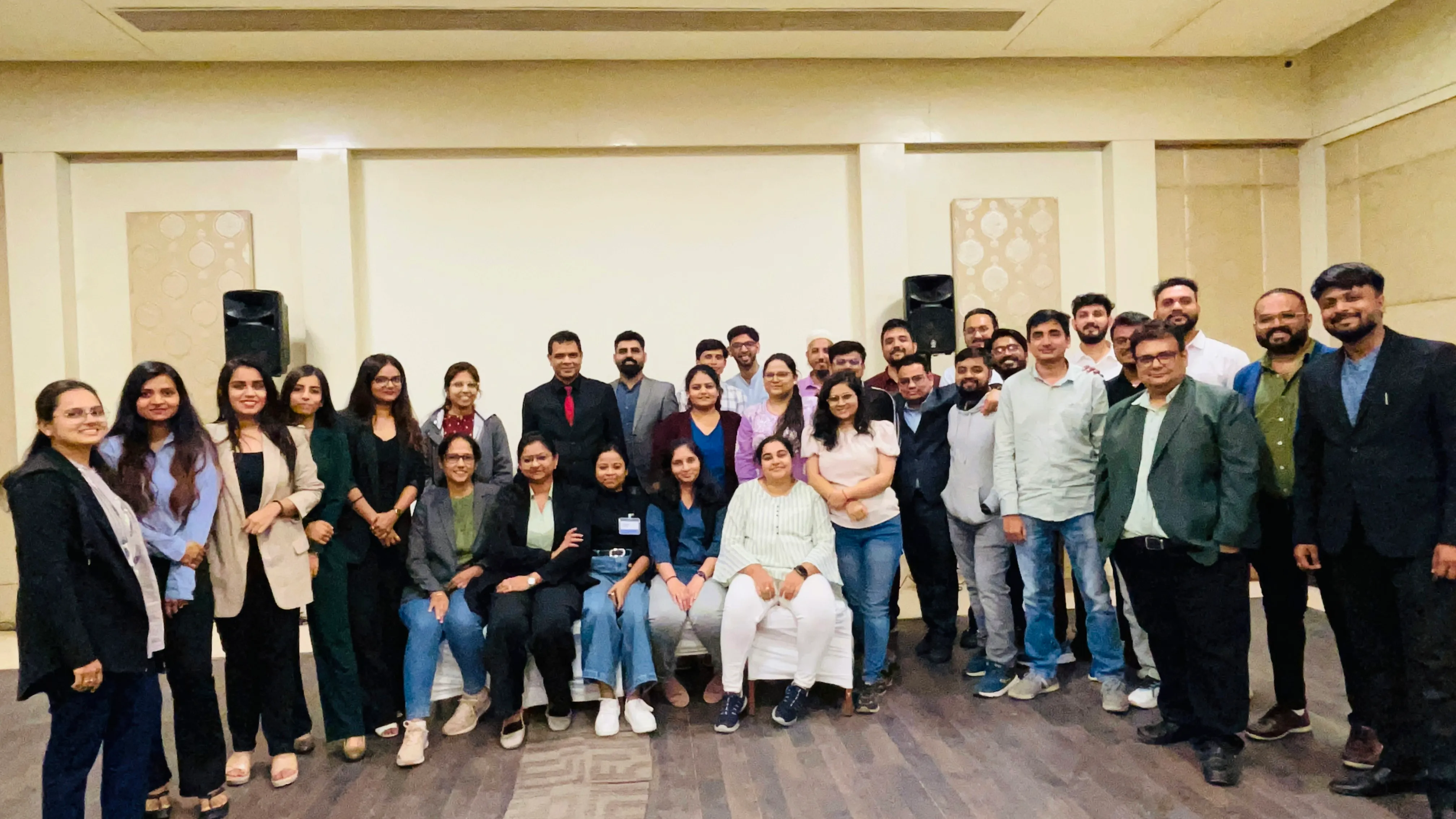
Promact team

We are a family of Promactians

We are an excellence-driven company passionate about technology where people love what they do.

Get opportunities to co-create, connect and celebrate!

Join Us

Vadodara

Headquarter

B-301, Monalisa Business Center, Manjalpur, Vadodara, Gujarat, India - 390011

+91 (932)-703-1275

Pune

46 Downtown, 805+806, Pashan-Sus Link Road, Near Audi Showroom, Baner, Pune, Maharashtra, India - 411045

USA

4056, 1207 Delaware Ave, Wilmington, DE, United States America, US, 19806

+1 (765)-305-4030
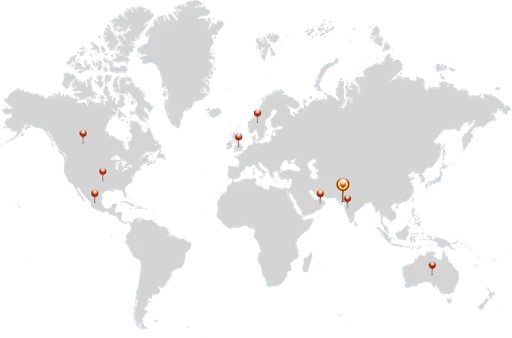
Promact global office locations on world map