

April 16, 2026
Why Your AI Needs Rules (And How to Set Them)
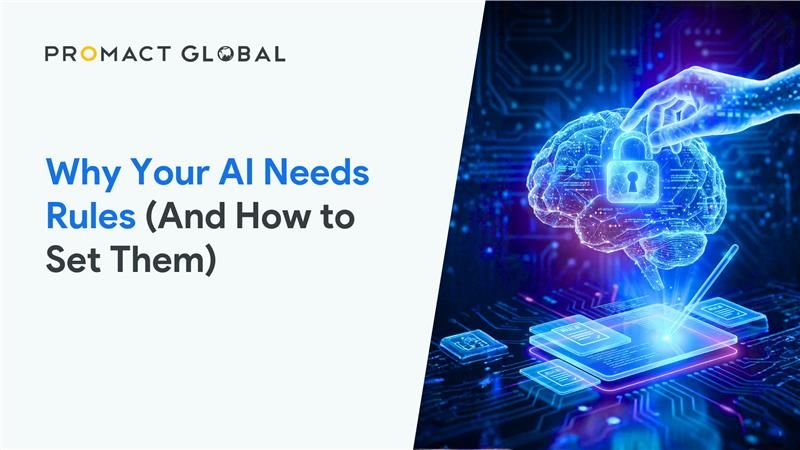
Artificial intelligence is moving from experimental technology to everyday business infrastructure. Startups are using AI to automate customer support, analyze data, generate content, and power entire SaaS products.
But as AI adoption grows, one reality is becoming clear: AI without rules can become unpredictable.
Recent discussions across the tech industry highlight the same concern—AI systems can behave in unexpected ways if they are not given clear boundaries. They may generate inaccurate answers, expose sensitive data, or make decisions that don’t align with business goals.
For SaaS companies and startup founders, the solution isn’t to avoid AI. The solution is to set clear rules before turning it on.
AI Is Powerful — But Not Always Predictable
AI models learn patterns from enormous datasets. This allows them to produce impressive results, but it also means they sometimes:
- Generate incorrect or misleading information
- Respond inconsistently to similar prompts
- Reveal confidential or proprietary data
- Produce content that doesn’t match your brand voice
Without guardrails, an AI system might do something technically correct but strategically wrong for your business.
That’s why modern AI deployments focus on governance and boundaries, not just capabilities.
Why Rules Are Critical for Business AI
Rules give your AI system structure. They define what the AI can do, cannot do, and should prioritize.
For startups and SaaS teams, these rules protect several critical areas:
1. Brand Protection
If AI generates customer-facing content, it must follow your brand tone, messaging style, and communication standards.
Without rules, your AI might produce responses that sound robotic, inconsistent, or even inappropriate.
Clear guidelines ensure every AI output reflects your brand identity.
2. Data Security
Many AI systems process sensitive information such as:
- Customer data
- Financial records
- Internal documents
- Product roadmaps
Rules ensure the AI never exposes confidential information or uses restricted data sources.
For many startups, this step is essential for maintaining compliance and customer trust.
3. Consistent Decision-Making
AI tools often assist with recommendations, analytics, and operational decisions.
Rules help ensure the AI:
- Uses approved data sources
- Prioritizes business goals
- Avoids making unsupported claims
- Flags uncertainty when needed
Without these guardrails, AI systems can generate outputs that look confident but are actually incorrect.
Types of Rules Every AI System Needs
Setting boundaries for AI doesn’t require complicated infrastructure. Most organizations start with three core rule categories.
1. Behavioral Rules
These define how the AI should communicate and interact.
Examples include:
- Use a professional and friendly tone
- Avoid speculation when data is uncertain
- Provide sources when possible
- Never give legal or medical advice
These rules ensure the AI behaves consistently with company standards.
2. Data Access Rules
These determine what information the AI can access or process.
For example:
- Only use approved knowledge bases
- Do not access private customer records
- Exclude internal documents from responses
- Prevent storage of sensitive inputs
This protects both user privacy and company security.
3. Operational Rules
These control what actions the AI can perform.
For example:
- AI can suggest actions but not execute them automatically
- AI cannot modify financial data
- AI must require human approval for certain outputs
Operational rules prevent automated systems from making critical mistakes.
How to Set Effective AI Boundaries
Creating rules for AI systems doesn’t need to be complicated. A practical approach involves a few simple steps.
Step 1: Define the AI’s Role
Start by answering a basic question:
What should this AI actually do?
Examples include:
- Customer support assistant
- Marketing content generator
- Internal analytics assistant
- Product recommendation engine
The clearer the role, the easier it is to define appropriate limits.
Step 2: Identify Risk Areas
Every AI system has potential risks. Common ones include:
- Misinformation
- Privacy violations
- Inaccurate automation
- Brand reputation issues
Understanding these risks helps determine which rules are necessary.
Step 3: Create Guardrails
Guardrails can include:
- Prompt instructions
- system-level policies
- approval workflows
- monitoring tools
These ensure the AI consistently follows your defined rules.
Step 4: Monitor and Adjust
AI systems improve through feedback.
Track:
- incorrect outputs
- unusual responses
- user complaints
- system errors
Then update rules and prompts accordingly.
AI governance is not a one-time setup—it’s an ongoing process.
Why Startups Should Treat AI Like a Team Member
One useful way to think about AI is to treat it like a new employee.
When someone joins your company, you don’t just give them access to everything and hope for the best. You provide:
- clear responsibilities
- company policies
- approval processes
- performance feedback
AI requires the same structure.
Rules help the system operate effectively while protecting your organization.
The Future of AI Will Be Rule-Driven
As AI becomes more powerful, the companies that succeed will not be those using the most AI—but those using it responsibly and strategically.
Clear rules enable AI to:
- deliver consistent results
- protect sensitive information
- support human decision-making
- scale operations safely
For SaaS companies and startups, the takeaway is simple.
AI works best when it has freedom within clearly defined boundaries.
Final Thoughts
Artificial intelligence can transform how businesses operate, but it is not a set-it-and-forget-it technology.
Without clear rules, AI systems can become unpredictable and risky. With the right guardrails in place, however, AI becomes a powerful and reliable partner.
Before deploying AI across your workflows, take time to define the boundaries.
Because the smartest AI strategy isn’t just about capability— it’s about control.
Have a project like this in mind?
Tell us what you're building — we'll help you scope it and ship it.
Talk to usKeep reading
September 21, 2026
One Vendor, Four Breaches: What the Irregular Pattern Means for How You Vet AI Vendors

September 20, 2026
The Control Plane Era: What WSO2's Open-Source Agent Governance Bet Means for Enterprise AI Buyers
September 19, 2026