

May 28, 2026
Multi-Agent Systems: When One AI Bot Isn’t Enough
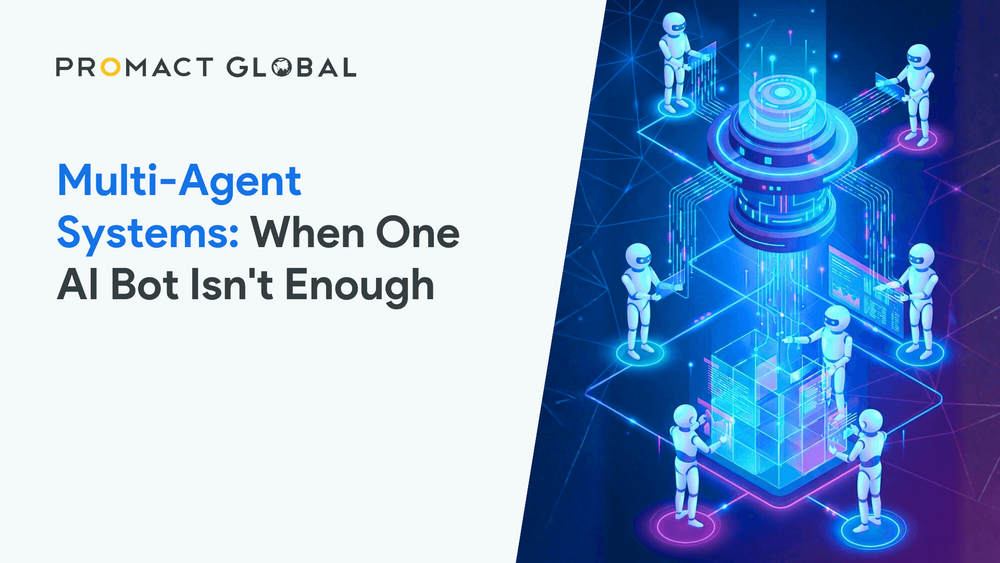
For the past few years, businesses have relied on single AI tools — one chatbot, one automation, one task at a time.
But that era is quickly fading.
Today, forward-thinking companies are building digital assembly lines powered by multi-agent AI systems, where multiple AI agents collaborate to complete complex workflows automatically.
Instead of asking one AI to do everything, businesses are now orchestrating teams of specialized AI agents — each handling a specific task.
What Are Multi-Agent AI Systems?
A multi-agent AI system is a network of AI agents working together to complete tasks, communicate, and make decisions.
Think of it like your business team:
- One agent handles customer inquiries
- Another processes data
- Another writes reports
- Another executes actions
Together, they create a seamless workflow.
This is where AI agent orchestration comes in — the process of coordinating these agents so they work efficiently without human micromanagement.
How AI Agent Orchestration Works
AI agent orchestration acts as the “manager” of your AI workforce.
Here’s how it typically flows:
- Input Trigger A customer request, data input, or event starts the process
- Task Distribution The system assigns tasks to different AI agents
- Agent Collaboration Agents share data and outputs with each other
- Decision Making Logic layers determine next steps
- Execution Final output is delivered — email sent, report generated, task completed
This creates a fully automated pipeline — like a factory, but digital.
Real-World Business Use Cases
Customer Support Automation
- One AI handles chat
- Another checks CRM data
- Another drafts responses
- Another escalates complex issues
Result: Faster support, lower costs, better customer experience
Marketing and Content Workflows
- AI researches keywords
- Another writes content
- Another optimizes SEO
- Another schedules posts
Result: Scalable marketing without hiring large teams
Sales Automation Pipelines
- AI qualifies leads
- Another drafts proposals
- Another follows up
- Another updates CRM
Result: Higher conversion rates with less manual work
Operations and Internal Workflows
- AI monitors systems
- Another analyzes performance
- Another generates reports
- Another triggers alerts
Result: Smarter decision-making in real time
Why Businesses Are Adopting Multi-Agent AI Systems
Here’s what makes this shift valuable:
Scalability
Run entire workflows with minimal human input
Speed
Tasks that took hours now take minutes
Cost Efficiency
Reduce hiring needs without sacrificing output
Specialization
Each AI agent is optimized for a specific function
When Should You Use Multi-Agent AI Systems?
Not every business needs this yet.
You should consider it if:
- You have repetitive workflows across departments
- Your team is overloaded with manual processes
- You want to scale without hiring aggressively
- You rely heavily on data-driven decisions
If you're just starting, a single AI tool may be enough.
But once complexity increases, orchestration becomes essential.
Google Cloud and the Future of AI Orchestration
Platforms like Google Cloud are accelerating this shift by enabling:
- Agent communication frameworks
- Workflow automation tools
- Scalable infrastructure for AI collaboration
This reduces the need to build systems from scratch and allows faster adoption.
The Future: AI Teams, Not AI Tools
We’re moving from:
“What can this AI do?” to “How can multiple AIs work together?”
Businesses that adopt multi-agent AI systems early will operate faster, smarter, and more efficiently than competitors.
Final Thoughts
If your business still relies on single AI tools, you're only using a fraction of what’s possible.
The real advantage lies in AI agent orchestration — where systems collaborate, execute, and optimize workflows like a team.
This is no longer experimental. It is already being implemented across industries.