

May 21, 2026
The AI Pricing Advantage: How Smart Businesses Use Dynamic Pricing Agents
Introduction
If you have ever booked a flight on a Tuesday and then checked the same route on Friday only to find the price had jumped by 40%, you have already experienced dynamic pricing in action. Airlines have been doing this for decades. Hotels figured it out too. And for a long time, the technology behind this kind of real-time, demand-sensitive pricing was only available to large enterprises with big data teams and expensive software.
That gap is closing fast.
Thanks to advances in artificial intelligence, AI dynamic pricing for small business is no longer a distant idea. It is a real, accessible tool that independent retailers, SaaS founders, service providers, and e-commerce operators are beginning to use right now. And the businesses that understand it early are quietly building a meaningful edge over those that are still relying on spreadsheets and gut feeling.
This article breaks down exactly how dynamic pricing agents work, why they matter, and which types of businesses stand to benefit the most from adopting them.
What Is Dynamic Pricing, and Why Does It Matter?
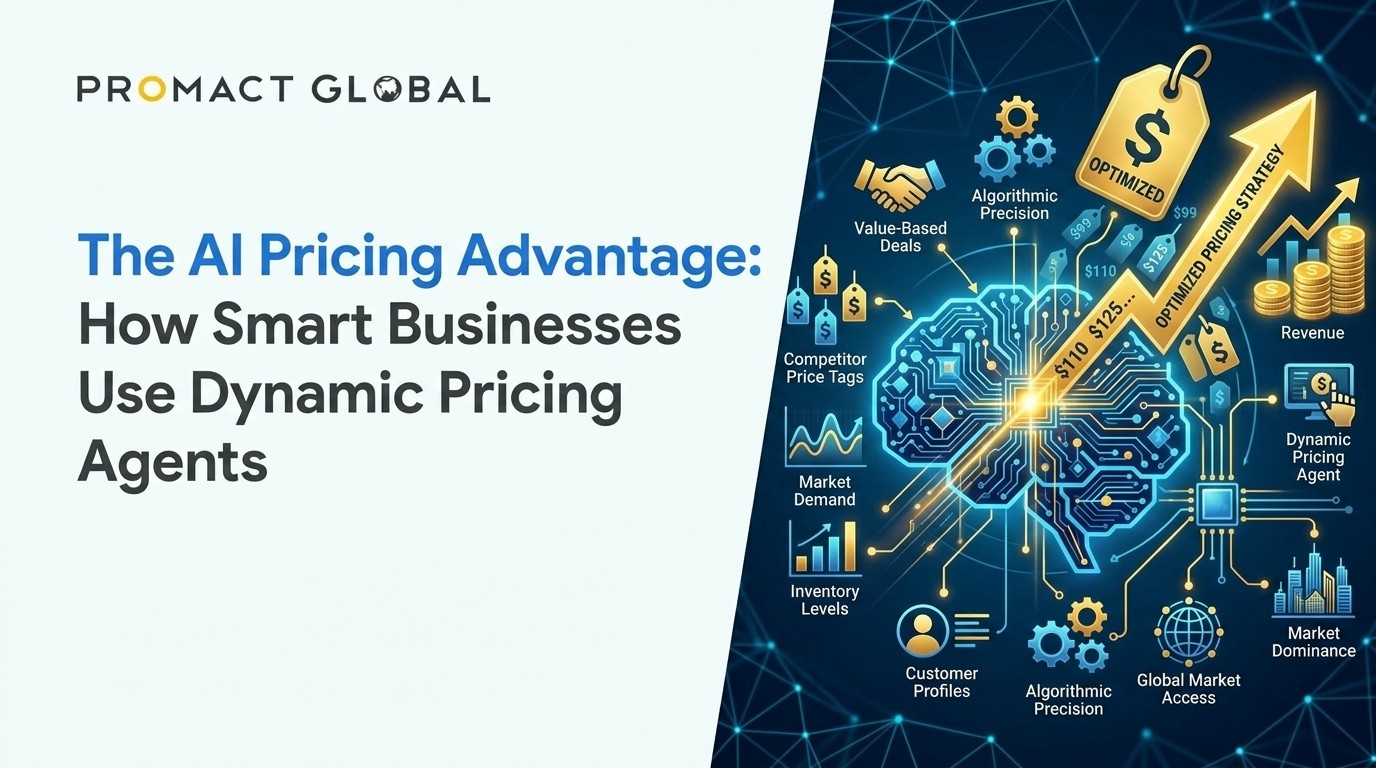
At its core, dynamic pricing is the practice of adjusting the price of a product or service in response to real-time factors like demand, competition, time of day, inventory levels, or customer behavior. The goal is simple: charge the right price at the right moment to maximize revenue without losing the sale.
The concept is not new. Economists have understood price elasticity for a long time. What has changed is the ability to act on it at speed and scale.
Traditionally, a small business might review its pricing once a quarter, maybe once a month if they were diligent. They would look at competitors, check margins, and make a call. But by the time any of that analysis translated into a price change, the market had already moved on.
Dynamic pricing removes that lag. Instead of reacting to the market days or weeks later, you are responding to it in real time, or even anticipating it before it shifts.
How Do AI Dynamic Pricing Agents Actually Work?
An AI dynamic pricing agent is a software system that monitors relevant data continuously and adjusts prices automatically based on rules or learned patterns. Think of it less like a spreadsheet and more like a very attentive pricing analyst who never sleeps and never takes a lunch break.
Here is what happens under the hood, in plain terms:
Data collection is the first step. The agent pulls in information from multiple sources simultaneously. This could include competitor prices scraped from the web, your own sales velocity and inventory data, time-based patterns like weekend traffic spikes, and even external signals like local events, weather forecasts, or seasonal demand curves.
Pattern recognition is where the AI component becomes genuinely useful. Machine learning models can identify relationships in data that no human analyst would catch manually. For example, a hotel pricing agent might learn that rooms sell out faster when a college sports team plays at home, and begin increasing prices automatically two weeks before every home game, without anyone telling it to look for that pattern.
Price adjustment happens automatically based on what the model learns. This can be rule-based, where you set boundaries and conditions, or fully autonomous, where the model optimizes within constraints you define. Most small business tools today offer a hybrid: you set the guardrails, and the AI works within them.
Feedback loops close the cycle. The agent tracks what happens after each price change. Did more people buy? Did revenue go up even if units dropped? Over time, the model gets better at predicting the optimal price for any given context.
The Difference Between Rules-Based and ML-Driven Pricing
It is worth drawing a clear line between two types of dynamic pricing that often get lumped together.
Rules-based pricing is straightforward. You define conditions and outcomes. If a competitor drops their price below X, lower yours by 5%. If stock drops below 20 units, raise the price by 10%. These are logical, transparent, and easy to audit. They work well in stable, predictable markets.
Machine learning-driven pricing goes further. Instead of rules you write yourself, the system discovers patterns you never explicitly programmed. It might figure out that customers browsing from a mobile device on Sunday evenings between 9 and 11 PM are significantly more likely to convert at a 15% higher price point, and start applying that insight automatically. You would never find that pattern by hand.
For most small businesses just getting started with AI dynamic pricing, a combination of both approaches is realistic. Start with clear rules to protect your margins and brand, and layer in ML recommendations as your confidence in the system grows.
Which Business Models Benefit Most from AI Dynamic Pricing for Small Business?
Not every business is equally suited to dynamic pricing. The best candidates tend to share a few common traits: perishable inventory or time-sensitive capacity, variable demand patterns, and a customer base that is relatively tolerant of price changes.
E-commerce and Online Retail
This is probably the most active space for small business dynamic pricing right now. Online retailers face competitors who are already adjusting prices algorithmically, sometimes hundreds of times per day. Platforms like Amazon have normalized the idea that prices fluctuate, which means customers largely expect it.
For an independent e-commerce brand, even a simple AI-assisted repricing tool can make a significant difference. If a competitor runs out of stock on a popular item, your agent raises your price slightly to capture the additional demand. If your own warehouse is overstocked near the end of a season, the agent nudges prices down to move inventory before storage costs pile up.
SaaS and Subscription Products
SaaS businesses operate on margin economics that make pricing precision especially valuable. A small change in average revenue per user can have an outsized impact on overall profitability.
AI dynamic pricing for small SaaS businesses is typically applied at the plan level rather than on individual transactions. For example, an AI agent might analyze which pricing tier converts best for users coming from a specific acquisition channel, or identify the price sensitivity of trial users based on their usage patterns before they hit a paywall. This kind of behavioral pricing insight helps founders optimize conversion without broad discounting.
Service Businesses with Capacity Constraints
Think yoga studios, tutoring services, independent consultants, or photography businesses. When you have fixed capacity and variable demand, pricing becomes a scheduling tool as much as a revenue tool.
Offering lower prices during slow periods and higher prices when demand spikes is not price gouging. It is a rational way to fill your calendar and reward customers who have flexibility with a better deal. AI tools can learn these patterns and apply them without the owner having to monitor bookings manually.
Local Hospitality and Experiences
Short-term rentals, boutique hotels, and experience-based businesses were some of the earliest adopters of dynamic pricing outside of the airline industry. Tools like PriceLabs and Wheelhouse have brought sophisticated pricing logic to individual Airbnb hosts, which is a good example of how AI dynamic pricing for small business has already scaled down from enterprise software to something one person can manage.
Common Concerns and How to Address Them
One worry that comes up often is the fear of alienating customers. People notice when prices change, and nobody likes feeling like they paid more than someone else for the same thing.
The key is transparency and consistency. Most customers accept variable pricing when it follows a logic they can understand. Surge pricing during a busy weekend at a short-term rental makes intuitive sense. What damages trust is arbitrary or opaque price changes that feel exploitative.
Setting floors and ceilings in your AI pricing agent is important for this reason. Your brand has a price range that fits its identity. The agent should operate within that range, never below your minimum acceptable margin and never so high that it undermines your relationship with customers.
Another concern is complexity. Many small business owners assume they need a data science team to implement anything AI-powered. That was true five years ago. Today there are tools with intuitive dashboards built specifically for non-technical users, and the number of integrations with platforms like Shopify, WooCommerce, and Stripe is growing quickly.
Getting Started Without Overcomplicating It
The practical starting point for most small businesses is not a custom-built AI pricing engine. It is a focused experiment.
Pick one product category or one service tier where you suspect pricing is leaving money on the table. Enable a repricing tool that connects to your existing platform. Set conservative guardrails. Run it for 30 to 60 days, track your revenue per unit sold, and see what you learn.
That first experiment will tell you more about your customers’ price sensitivity than any amount of research would. And the data you collect becomes the foundation for more sophisticated pricing decisions later.
There are now purpose-built AI dynamic pricing tools for small business across most major categories. Prisync and Wiser are popular for retail. PriceLabs is widely used in short-term rentals. Paddle and Baremetrics offer pricing intelligence features for SaaS. Choosing the right one depends on your platform, your category, and how much customization you need.
The Bigger Picture
Dynamic pricing is sometimes discussed in terms of pure revenue optimization, but its value goes deeper than that. When you understand how demand for your product shifts across time, channels, and customer segments, you understand your business in a fundamentally richer way.
AI dynamic pricing for small business is not about squeezing every last rupee or dollar out of every transaction. It is about building a pricing strategy that responds to reality instead of ignoring it. The businesses that do this well tend to be more resilient during slow periods, more profitable during peak ones, and better positioned to grow sustainably.
The airlines figured this out long ago. The technology is now small enough to fit in your browser.
Have a project like this in mind?
Tell us what you're building — we'll help you scope it and ship it.
Talk to usKeep reading

August 25, 2026
The AI-SPM Gold Rush: What $210 Million in 24 Hours Says About Securing Your AI Agents
August 23, 2026
Agent Plugins 1.0: What Actually Ports Between Your AI Coding Tools — And What Doesn't
August 22, 2026