May 28, 2026
AI Agent Pricing Models Explained: What Is an “Agentic Enterprise License”?
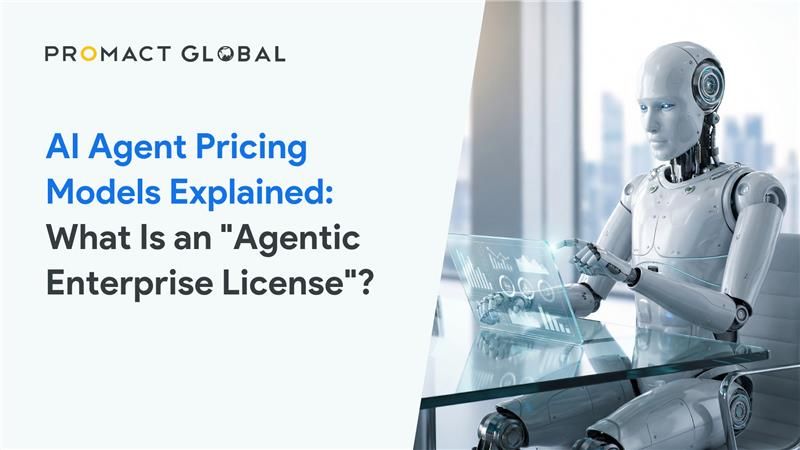
AI Agent Pricing Models Explained (2026 Guide)
AI agents are no longer experimental tools—they’re becoming core infrastructure inside modern enterprises. But as adoption grows, one challenge keeps surfacing:
How do you price something that works autonomously, scales unpredictably, and delivers variable value?
That’s where new AI agent pricing models—especially the Agentic Enterprise License—come into play.
Let’s break it down in plain English.
The Evolution of AI Agent Pricing
1. Usage-Based Pricing (The Early Model)
This was the default starting point.
- Pay per API call, token, or task
- Scales with usage
- Example: “$X per 1,000 agent actions”
Problem:
- Costs become unpredictable
- Hard to budget at enterprise scale
- Finance teams face uncertainty
2. Subscription-Based Pricing
Vendors shifted toward:
- Monthly or annual pricing tiers
- Based on:Number of usersAgent capabilitiesFeature access
Trade-off:
- More predictable than usage-based
- But can limit scalability or overcharge low usage
3. Hybrid Models (The Middle Ground)
Many vendors tried combining both:
- Base subscription plus usage overages
Result:
- Complex pricing
- Difficult forecasting
- Procurement friction
What Is an “Agentic Enterprise License”?
This is the 2026 breakthrough model.
Simple Definition:
An Agentic Enterprise License Agreement (AELA) is a fixed-cost, scalable licensing model that allows organizations to deploy AI agents broadly across the enterprise without worrying about per-use costs.
Think of It Like This:
Instead of paying per action:
You pay for capacity, capability, and business outcomes.
Key Features
1. Predictable Pricing
- Annual or multi-year contracts
- No surprise overages
2. High or Unlimited Usage
- Encourages wide adoption
- Removes fear of scaling
3. Role-Based or Function-Based Access
- Pricing tied to:Departments (HR, Sales, Operations)Use cases (automation, analytics, support)
4. Outcome-Oriented Value
Some vendors tie pricing to:
- Productivity gains
- Cost savings benchmarks
- SLA-backed performance
Why CIOs Prefer Agentic Licensing
CIOs pushed for this shift for several reasons:
Budget Control
No unpredictable monthly bills
Easier Internal Adoption
Teams can use AI agents freely
Faster ROI Realization
Wider usage leads to faster value extraction
How AI Agent Pricing Works in 2026
ModelCost PredictabilityScalabilityBest ForUsage-BasedLowRiskyStartups, experimentationSubscriptionMediumLimitedSmall to mid-sized teamsHybridComplexConfusingTransitional organizationsAgentic Enterprise LicenseHighHighEnterprises
How to Choose the Right Model
For Startups and SMBs:
- Start with usage-based or subscription
- Focus on flexibility and low upfront cost
For Mid-Sized Companies:
- Consider hybrid models carefully
- Watch for hidden overage costs
For Enterprises:
- Push for Agentic Enterprise Licensing
- Especially if:You plan large-scale deploymentMultiple departments will use AI agents
How to Negotiate an Agentic Enterprise License
1. Negotiate Usage Ceilings
Even “unlimited” plans have limits.
Clarify:
- Fair use thresholds
- Performance throttling
2. Tie Pricing to Business Outcomes
Align pricing with:
- Productivity improvements
- Cost savings
- Automation KPIs
3. Lock Multi-Year Discounts
- 2–3 year agreements often provide:Better pricingPriority supportCustom features
4. Demand Transparency in AI Costs
Ask:
- What drives internal cost calculations?
- What happens if usage spikes?
Common Pitfalls to Avoid
- Falling for “unlimited” without reviewing terms
- Ignoring integration and support costs
- Overcommitting before internal adoption is proven
- Not aligning pricing with business goals
The Future of Enterprise AI Licensing
We are moving toward:
- Outcome-based pricing models
- AI-as-a-workforce billing
- Fully autonomous agent ecosystems
The Agentic Enterprise License is an early step in this direction.
Final Thoughts
AI agent pricing in 2026 is no longer just about cost—it is about strategic alignment.
If you are scaling AI across your organization, the right licensing model can determine whether you achieve controlled growth or face escalating costs.